

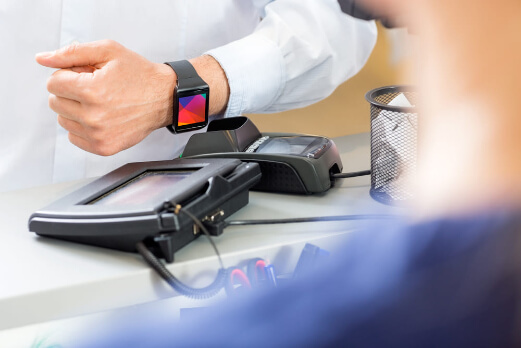
The power of wearable technology in healthcare
At IQVIA, with 61,000 colleagues in over 100 countries, we’ve earned a reputation for fostering a network of ambitious and dedicated people to come together and produce innovative medical solutions. We always strive to be extraordinary – every step of the way. And we’re here to help you do the same.
If you’re working in pharmaceutical sales or looking to stay at the top of your game within the ever-evolving world of medical device careers, it’s important to keep up to date with industry trends and developments.
With a proud heritage of innovation and discovery, we know a thing or two about staying on top of trends shaping the medical devices industry. One development growing in use across healthcare is wearable tech. Given their versatility, wearables have gained tremendous popularity in recent years, seamlessly integrating into our daily lives. They have the potential to transform a variety of industries, including healthcare, with endless possibilities for innovation and improvement.
What is wearable technology?
Wearable technology has become ubiquitous, encompassing a range of electronic devices that can be worn on the body, as an accessory, or integrated into clothing or other items. Popular examples like smartwatches and fitness trackers might spring to mind but cutting-edge wearable tech is designed to serve various purposes, including wearable medical devices which are one of the largest growing innovations in medical device industry.
Wearable technology is enabled by a sophisticated combination of sensors, processors, and communication technologies that collect, process, and transmit data to other devices or the cloud for further analysis. They allow us to track physical activity, monitor vital signs, and display information.
Where can we see wearable technology examples in healthcare?
There have been many recent advancements in wearable medical devices that are transforming the way healthcare is delivered.
The list of devices making a difference in healthcare keeps growing, but some of the best and most recent advancements include Continuous Glucose Monitoring (CGM) devices that monitor glucose levels in real-time, providing a more accurate and continuous measurement than traditional blood glucose meters. This is especially helpful for people with diabetes who need to track their glucose levels throughout the day.
In a global landscape growing ever more hybrid and remote, it’s worth mentioning Remote Patient Monitoring (RPM) devices, which allow healthcare providers to monitor patients remotely, reducing the need for in-person visits. RPM devices can track vital signs, medication adherence, and other health metrics, enabling providers to detect potential issues early and intervene before they become serious.
How can we maximise patient care with wearable technology?
Wearable technology in healthcare has the potential to improve patient outcomes, reduce healthcare costs, and provide individuals with more control over their health.
In an extensive review of wearable technology applications in healthcare, expert medical and data researchers, Min Wu, Ph.D., and Jake Luo, Ph.D. reported insightful findings in their widely cited journal publication, Wearable Technology Applications in Healthcare: A Literature Review. From prevention of diseases, maintenance of health (including fall prevention and weight monitoring), patient management for cancer survivors and stroke patients, to disease management and more, the scope for maximising patient care with wearable technology is expansive.
What are the limitations of wearable medical devices?
Patient data privacy and security is a major concern with wearable devices as they collect and transmit sensitive health data. If not properly secured, this data could be vulnerable to hacking, theft, or misuse. But developments in encrypted data transmission, user authentication and more secure data storage are constantly evolving, with new improvements being made all the time to protect data privacy and security.
There’s also an ethical element around access to personal information as well as inaccessibility to those who can’t afford them. Healthcare providers may not be able to cover the cost of these devices, limiting their use in certain settings. It’s important that while we embrace innovations in wearable tech, researchers and developers consider ethical issues.
Take charge of your medical device career
Looking to start a career as a medical sales representative or to advance your career with a trusted company?
If you’re ready to join leading global providers of advanced analytics, technology solutions, and clinical research services to leaders at the forefront of the life sciences industry, why not apply for one of IQVIAs range of opportunities? Explore key account manager jobs, medical sales rep jobs, or clinical pharmacist jobs.
If you can’t find the role that you're looking for, you can sign up for job alerts and you'll be the first to hear about our latest roles.
Find out more about life at IQVIA
Did you know IQVIA has
Excellent work-life balance
and is committed to this kind of culture
Did you know IQVIA cares about
Health and Wellbeing
for all its employees
Did you know IQVIA has
Countless development opportunities
for personal and professional growth
Did you know IQVIA has
56+ petabytes of unique data
including 1.2B+ non-identified patient records
Did you know IQVIA has
86,000+ employees
from clinicians to data scientists each transforming healthcare in 100+ countries
Did you know IQVIA has
1,900+ epidemiologists
and real world insight experts
Did you know IQVIA has
4,600 data scientists
including statisticians and analytics developers
Did you know IQVIA has
56+ petabytes of unique data
including 1.2B+ non-identified patient records
Did you know IQVIA has
1,900+ epidemiologists
and real world insight experts
Did you know IQVIA has
Countless development opportunities
for personal and professional growth
Did you know IQVIA has
Excellent work-life balance
and is committed to this kind of culture
Did you know IQVIA has
86,000+ employees
from clinicians to data scientists each transforming healthcare in 100+ countries
Did you know IQVIA cares about
Health and Wellbeing
for all its employees
Did you know IQVIA has
4,600 data scientists
including statisticians and analytics developers
Related jobs
We are sorry but your search has returned no results.
Please try some of the links below to find what you are looking for:
IQVIA has been behind my development to become a MSL. The contracts that I have worked on have allowed me to push clinical projects with a recent opportunity to manage a pilot scheme integrating e-detailing into an established field based team. The result was an increase in sales.
Just following on from the amazing news I got yesterday I wanted to say a really special thank you for all the help and support you have provided throughout the entire recruitment process.
A quick note to say thank you for your time this morning discussing my future career options. As you know I was feeling very conflicted about the right decision. Discussing the role with you gave me chance to clarify what is important to me.
Once again I cannot thank you enough for not only approaching me with this opportunity but also for all the support you’ve given me along the way!
Since joining IQVIA I have had unrivalled support and development from my manager to enable me to aspire to move into secondary care. I feel like my career is strongly supported by my manager in order to maximise my potential.
IQVIA has been behind my development to become a MSL. The contracts that I have worked on have allowed me to push clinical projects with a recent opportunity to manage a pilot scheme integrating e-detailing into an established field based team. The result was an increase in sales.
IQVIA Related insights
Recently viewed jobs